Size Comparison Game
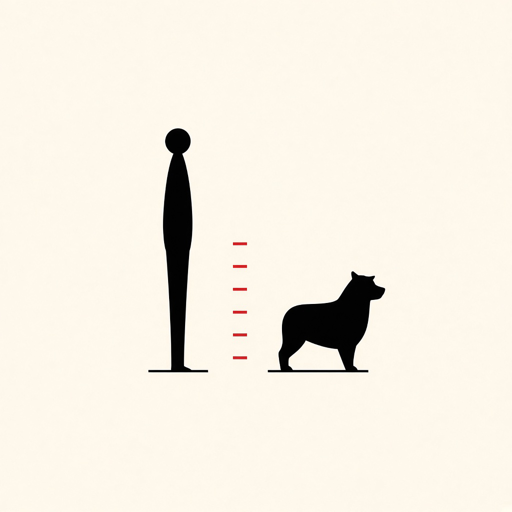
This page is the playable size comparison game from Size It Up — the same daily five-round challenge as the home page. Compare a black reference at true scale to a white silhouette you resize, lock in, and find out how far off your eye for scale really was.
What is a size comparison game?
A size comparison game turns relative scale into a puzzle. Most people can name a blue whale or the Eiffel Tower, but almost nobody has stood next to both — so the number in your head is a guess. Size It Up makes that guess visual: stretch one silhouette until it looks right beside another, then check the tape measure.
Unlike trivia quizzes that ask for a typed number, this size comparison game uses silhouettes from a library of 391 sourced objects — animals, vehicles, landmarks, dinosaurs, and everyday things — so you train the same skill you use when judging distances in real life.
How to play this size comparison
- Compare. The black cut-out is the reference at true scale, with its real measurement labeled.
- Resize. Slide on the board, drag the bottom scale, or tap − / + until the white silhouette looks right.
- Lock in. The true size appears in red over your guess, with points and how far off you were.
- Finish five. Later rounds count ×2 and ×3 — up to 1,000 for a perfect day.
Want a longer walkthrough? See how to play Size It Up.
True-scale examples
These are the kinds of pairs a size comparison game loves — precise sizes, a clean multiple, and a public source you can check. Use them as mental anchors before you play the board above.
Blue whale vs school bus
≈2.3× longerAn adult blue whale is about 25–30 m long; a typical full-size school bus is about 12 m. That puts the whale a little over twice as long as the bus — closer to 2.3× than the “ten buses” many people picture. Wikipedia — Blue whale.
Eiffel Tower vs Statue of Liberty
≈3.5× tallerThe Eiffel Tower stands 330 m to the tip of its antenna. The Statue of Liberty (foundation to torch) is about 93 m. Side by side, the Paris tower is roughly 3.5× taller. Wikipedia — Eiffel Tower.
Giraffe vs adult human
≈3.2× tallerA large male giraffe reaches about 5.5 m at the horns. An average adult human is about 1.7 m tall. The giraffe is a little over three people stacked — about 3.2× taller — which is why “giraffe vs person” rounds feel harder than they look. Wikipedia — Giraffe.
Boeing 747 wingspan vs tennis court
≈2.7× longerA 747-400 wingspan is about 64.4 m. A regulation tennis court is 23.77 m long. Wingtip to wingtip covers roughly 2.7 tennis-court lengths. Boeing — 747-400 airport planning.
Saturn V vs Statue of Liberty
≈1.2× tallerNASA’s Saturn V stood about 110.6 m tall on the pad. Liberty from ground to torch is about 93 m. The rocket is taller — about 1.2× — which surprises players who remember Liberty as “enormous” and rockets as “looks small on TV.” NASA — Saturn V facts.
Basketball vs baseball (diameter)
≈3.2× acrossA men’s basketball has an official circumference of 29.5 in (≈75 cm), so a diameter near 24 cm. A baseball’s circumference is about 9–9.25 in, diameter roughly 7.4 cm. The basketball is a bit over 3× across. Wikipedia — Basketball (ball).
Great Pyramid vs Notre-Dame towers
≈2× tallerKhufu’s Great Pyramid originally rose about 146.6 m (today ~138.5 m). The western towers of Notre-Dame de Paris are about 69 m. Even the truncated modern height is still about 2× the cathedral towers. Wikipedia — Great Pyramid of Giza.
African elephant vs adult human (height)
≈2× tallerA large bull African bush elephant stands about 3.2–4 m at the shoulder. Against a 1.7 m person that is roughly 2× shoulder height — easy to underestimate when you only know the animal from photos. Wikipedia — African bush elephant.
What it measures
Every Size It Up round names one dimension — height, length, width, diameter, or wingspan — and you compare only that axis. Height is tip-to-ground for standing things; length is nose-to-tail or end-to-end; width is side-to-side; diameter is across a ball or disc; wingspan is tip-to-tip for aircraft and birds. The silhouette may look “huge” in area while the labeled axis is what scores.
Linear scale tricks the rest of your intuition: 2× length ≈ 4× area ≈ 8× volume. Double a whale’s length and the silhouette covers about four times the screen; the animal’s bulk would scale near eight times if all three axes grew together. That is why “a bit bigger” guesses collapse when the reveal lands — you were thinking in area while the game scored a single line.
Why the eye guesses wrong
You know what a blue whale looks like. You have seen a thousand photos. Still, almost nobody places it correctly next to a school bus. That gap is not stupidity — it is how human perception is wired, and it is the whole point of a size comparison game.
Weber’s law (and related logarithmic scaling) says we notice relative change, not absolute meters. Doubling a 2 cm insect feels dramatic; doubling a 200 m tower feels modest. Your brain compresses the ruler, so huge objects get pulled toward a mental “medium” and tiny ones get pushed up. Extremes are flattened.
We also underestimate area. When a silhouette grows twice as tall, its filled shape is about four times the pixels — but players often stop when it merely “looks a bit larger.” Volume is worse: eight times the stuff for a simple double in length. Photos crop context, remove the reference person, and train you on distorted scale.
Size It Up fights that bias with a fixed black reference at true scale. You are not asked for a number; you are asked to make two shapes look right together — then the red outline shows where Weber, area, and compressed extremes led you astray.
Why play Size It Up as your size comparison game?
Everyone gets the same five size comparisons each UTC day, so scores are fair to share. Scoring uses symmetric ratio error — half and double are equally wrong — which matches how hard visual scale actually is.
After the daily set, keep practicing in Unlimited mode without touching your streak. Read more about measurements and sources on the About page.
Frequently asked questions
- What is a size comparison game?
- A size comparison game asks you to judge how big one object is relative to another. In Size It Up you resize a white silhouette next to a black reference drawn at true scale, then lock in to see the real measurement.
- How does Size It Up scoring work?
- Scoring uses symmetric ratio error: half and double are equally wrong. Within about 6% of the true size scores 100 base points; half or double scores about 45; five times off scores 0. On the daily puzzle, rounds 1–2 count ×1, round 3 ×2, and rounds 4–5 ×3 — up to 1,000 for a perfect day.
- Is this size comparison game free?
- Yes. Size It Up is free in the browser with no paywall and no account required for the daily challenge or Unlimited practice.
- Where do the size measurements come from?
- Each silhouette is tied to a sourced length, height, width, diameter, or wingspan — typically an encyclopedia entry, museum note, or manufacturer specification. Contested sizes (which whale, with or without an antenna) are called out in the round when it matters.
- When does the daily size comparison reset?
- The daily five rounds refresh once per UTC day. Everyone worldwide gets the same set until the next UTC midnight.
- Can I replay today’s rounds?
- You can finish the daily five and review your score, then keep practicing in Unlimited mode with new random pairs. Unlimited does not reset or replace your daily streak.
- Do I need an account to play?
- No. The game runs in the browser. Streak and unit preference (metric or imperial) stay in local storage on your device.
- What dimensions does the game ask for?
- Each round names one axis: height, length, width, diameter, or wingspan. You compare only that labeled dimension — not overall area or “how big it feels.”
- Why is visual size so hard to guess?
- Human perception follows roughly logarithmic scales (Weber’s law), underestimates area growth, and compresses extreme values toward a mental middle. That is why a whale next to a bus fools almost everyone until you lock in.
- Is Unlimited the same as the daily size comparison game?
- Same library and same base scoring, different session: Unlimited has no shared daily set, no ×2/×3 schedule, and no streak impact — it is endless practice.